by Hector Ruiz | Jun 23, 2016 | Resources
Video Game Artist Salary for 2016
This week ending 06/25/2016 we have gathered a nice resource from the Game Industry Career Guide blog. This section goes over video game salaries for 2016. It talks about salary factors, details, demand, etc. For younger students wanting to get into the video game industry, this is a pretty good resource to check in order to make a better education decision in this professional path. Enjoy!
Click on the link below:
Video Game Artist Salary for 2016
Want to help us grow our resources section? If a resource has helped you greatly please e-mail it to me or any suggestions
to: me@eliottlillyart.com. I will be keeping this list updated as I discover new entries. Thank you--
by Hector Ruiz | Apr 15, 2016 | Resources
Working in the Game Industry: Every Day is Casual Friday
This week ending 04/16/2016 we have gathered a nice resource from the CG Society Featured Stories page that talks about working in the game industry, particularly its causal ambiance and atmosphere. Some of you might find this article entertaining and some might flash back through some memories at work. Either way, I hope you enjoy this article and click on the link to look through lots more articles from CG Society.
Working in the Game Industry: Every Day is a Casual Friday
Want to help us grow our resources section? If a resource has helped you greatly please e-mail it to me or any suggestions
to: me@eliottlillyart.com. I will be keeping this list updated as I discover new entries. Thank you--
by Eliott Lilly | Apr 11, 2016 | Questions
Question submitted by Jonathan E.
Hey Eliott!
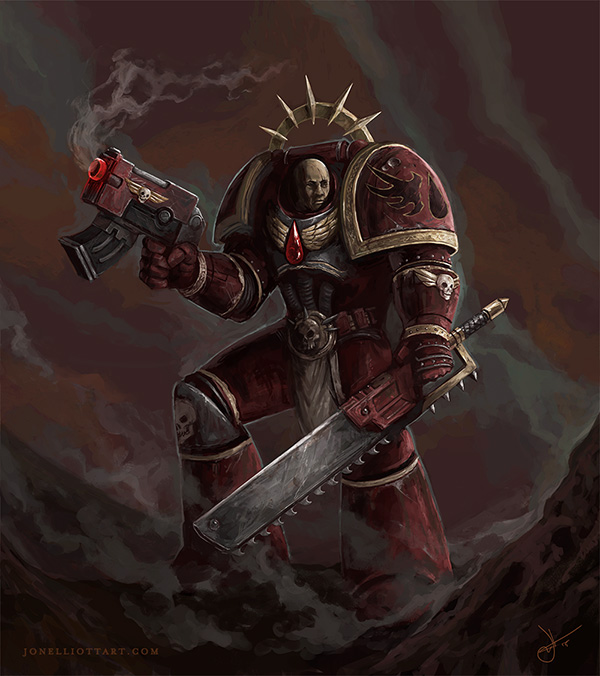
What are the day-to-day operations of a concept artist are like? I am interested to know the sort of artistic executions concept artists are responsible for, and what I can expect to be doing as one (Not the daily routine that a concept artist goes through) Will I be working on finished images or sketches? The artwork I’ve seen on websites like Artstation or Kotaku is always “finished” and “complete”, yet I heard from an ex-Blizzard employee, that the majority of his day was spent in black and white line drawings. I’ve also heard it said “I hope you like drawing people’s faces for 10 hours a day for 4 years”. That of course seems extreme, but the point very much comes across. So which one is it? To that same point, what sort of workloads do concept artists deal with? I’ve heard it said (also from an ex-Blizzard employee) that concept artists don’t endure the same levels of crunch as the “heavy lifting” sits within the post-production / polishing phases. Is this true?
Thanks so much! Check out some of my artwork.
Jonathan
Hey Jason, great questions. I think it all depends on your work situation.
If you are Freelancing:
Mitigating a client’s expectations is crucial since they will be offering you work based on your perceived abilities. If your portfolio showcases work of a high caliber, and you promise the client a similar result, then that is what they will come to expect from you. When I deal with clients, I often explain to them that in the same time it takes me to do a single super polished image, I can produce 6 or 8 simple greyscale studies that further explore ideas. Since it’s their dollar I leave the final choice up to them, but here’s what I’ve learned:
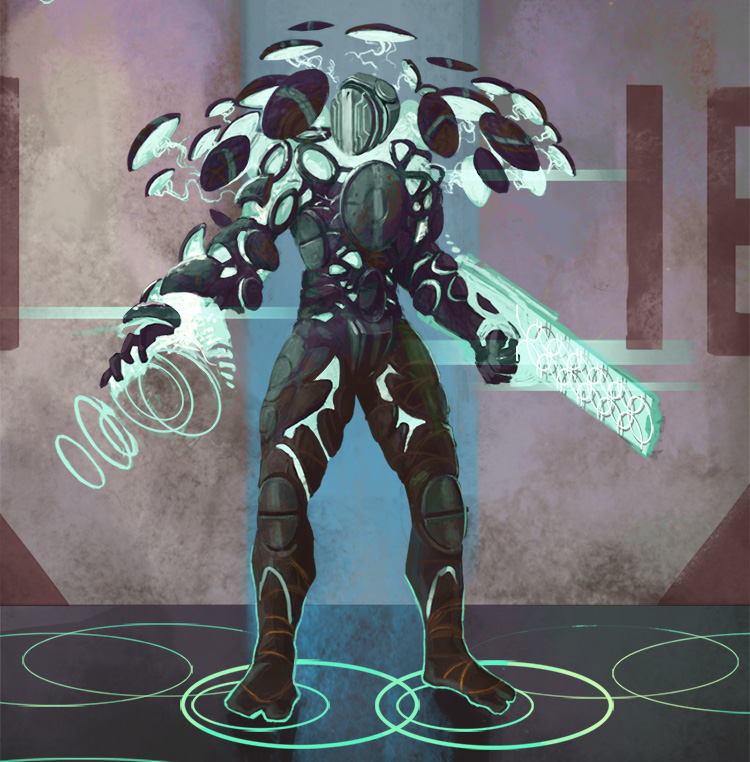
Bigger companies with bigger budgets, don’t really flinch at this, since they usually extend month long contracts (instead of a piece-by-piece basis) and they ask me to do a combination of both. For example, when working on Black Ops 3, I was the “Weapons guy”. Turnaround times were tight, and for efficiency, my daily deliverables were done strictly in line drawings, greyscale images, napkin doodles etc. Once the design was approved I would be given a bit more time to do the final render pass in color. Occasionally I would even have enough time to use 3d/ Keyshot to assist.
And that’s all did for 2 years. Weapons (and the occasional vehicle). I must’ve done 300 weapon concepts to arrive at the 27 that actually made it into the game. That’s the reality. The comment about “drawing people’s faces for 10 hours a day for 4 years” isn’t really that far off.
Working with smaller companies and/ or individuals is a similar experience, but, more emphasis and time is usually given to the final image. Since it will usually be used for both production and marketing. I still might give them a greyscale image or two for speed, but will do far fewer revisions and idea exploration. The subject matter I get to draw also varies greatly, since they may need me to do several things, instead of one thing over and over again.
If you are working in house:
My experience has varied working from job to job a studio. Because the Art Director is in the same building, the feedback process is much quicker and artwork can be reviewed in real time. There was also friendly competition between the other in house concept guys, and we were all trying to out-do each other. As such, I spent most, if not all, of my time painting high quality images in color. (Still not to the level of polish you’d find Art Station though).
Even though the “heavy lifting” is done in the polish phase of game creation, a concept artist work is never really done. Trust me, when everyone else is crunching in the studio, you will be too. Partly cuz you’ll get random tasks from your art director, (that you will likely have absolutely no business doing) but also in part because you will feel guilty about leaving at 6pm, when everyone else is staying till 10. There’s a compromise thereof course, but you get the notion.
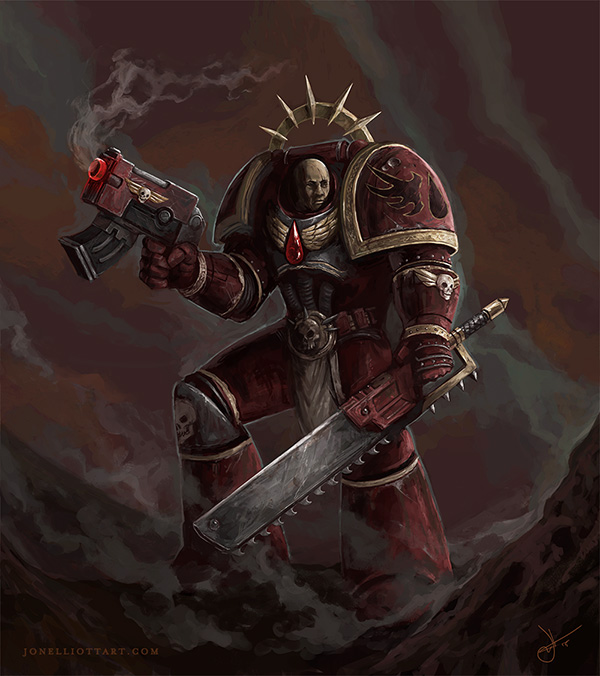
Ultimately, the theme that remains consistent between every type of clients is their desire for the highest quality of work in the shortest amount of time, and at the lowest cost to them. It’s up to you to decide what you are comfortable providing them with.
I hope this helps.
-Eliott

by Hector Ruiz | Apr 8, 2016 | Resources, Reviews

What to Look for in Concept Art Education
This week ending 04/09/2016 we discuss an important subject that goes through a lot of concept art students. The topic of education and how to succeed in this career are the most asked questions from students. Well, that and what kind of brush does a seasoned artist use to paint epic works. In all seriousness let’s discuss some thoughts on concept art, education, what to look for, and how to get the best of it. These may not cover a lot of the questions students tend to ask, but will certainly scratch some of the big ones. We’ll break this down into several parts that will be continued in the future. Enjoy!
As a student and teacher myself, I’ve had a lot of these questions and having attended several classes and schools with concept art in mind, I might be able to shed some light into this subject.
1. Where do I go to school?
You can go wherever you want. Commitment is the key to getting into this career. The more time you’re willing to spend on your craft, the better you’ll be and the faster you’ll get there. It’s understandable that life and things get in the way, but how much you want something will determine what you’re willing to sacrifice to get there.
2. What’s the best school to attend?
Basically, you have to think of your goal and what exactly you want to do and work on. Then, you can evaluate the school that will give you the skills you need without offering other subjects that might distract you. If you want to be a concept artist and designer, don’t spend time learning how to do things unrelated to your focus. I’ve attended schools that offer so many things and give you so many options that in the end have slowed me down. Focus is key. If you want to be a concept designer, don’t go to an illustrator school. Don’t get me wrong, there are many ways to get here and some things taught in schools will give you a greater sense of life, but if you really want a more refined and straight way of becoming a concept artist, attend schools like FZD School of Design or Brainstorm. They’ll sure whip you into shape.
3. When I graduate I will have a job as a concept artist and will also get paid well.
Well…graduating from a school, be it something like Art Center will not guarantee you a job at Naughty Dog. It takes networking, a good work ethic, good portfolio work, great personality, more self-improvement, etc. One of the things i tend to look for as well is whether or not the school offers job related aid. It might be a school that hosts senior shows where recruiters from gaming and film industries attend. This is so big when it comes to selecting a school. Do be careful with how schools market themselves. Some schools might change their policies or give you misleading information on this. You also have to look at the economy and know about the industry your getting yourself into. Sometimes you may have to bounce from place to place to keep a steady paycheck. Other times you might not have a job for a few months. It’s not a sure thing so don’t expect the job to be waiting for you because you have a degree or certificate from a certain school. Now, if you have the right skills, you’ll have an easier time finding resources or jobs. Just be weary of not getting comfortable or else someone more eager will take the job from you.
4. I don’t have money to move to California or Singapore.
In this age of technology is not an absolute deal breaker not attending schools in person. There are several good schools available with great teachers. If you absolutely have to attend a school in person, save some money while you attend online classes. Remember to always improve. Education is expensive as it is so adding a big move can be even more daunting. Again, we have to go back to how committed you are to attaining your goals. You can watch the movie Rudy movie as an inspiration if you’d like.
We’ll stop here for now and will continue in future segments. I hope this can help some students who are wondering about how to get there. If you’d like send us some questions or stories on how you got to where you are.
Want to help us grow our resources section? If a resource has helped you greatly please e-mail it to me or any suggestions
to: me@eliottlillyart.com. I will be keeping this list updated as I discover new entries. Thank you--
by Hector Ruiz | Apr 1, 2016 | Resources
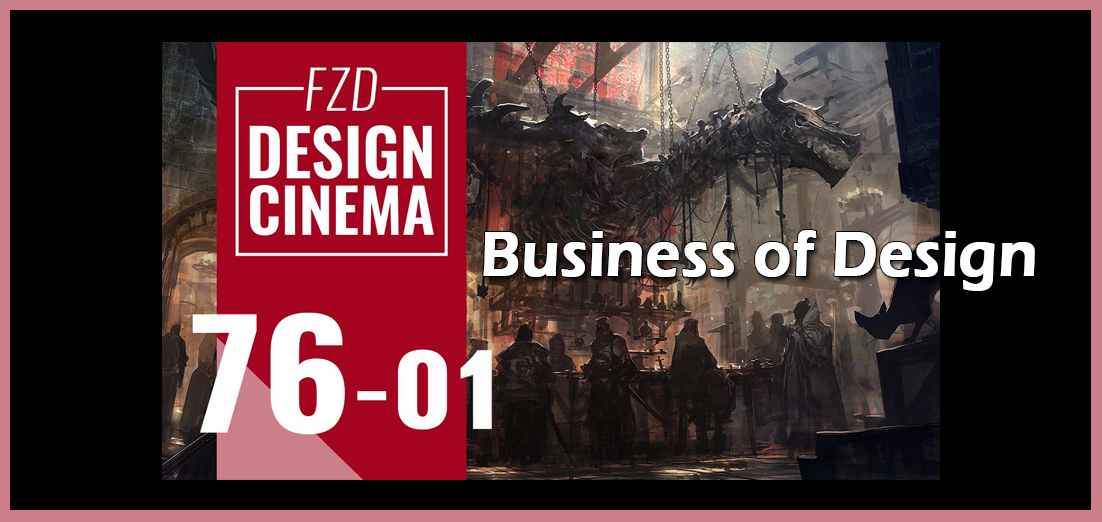
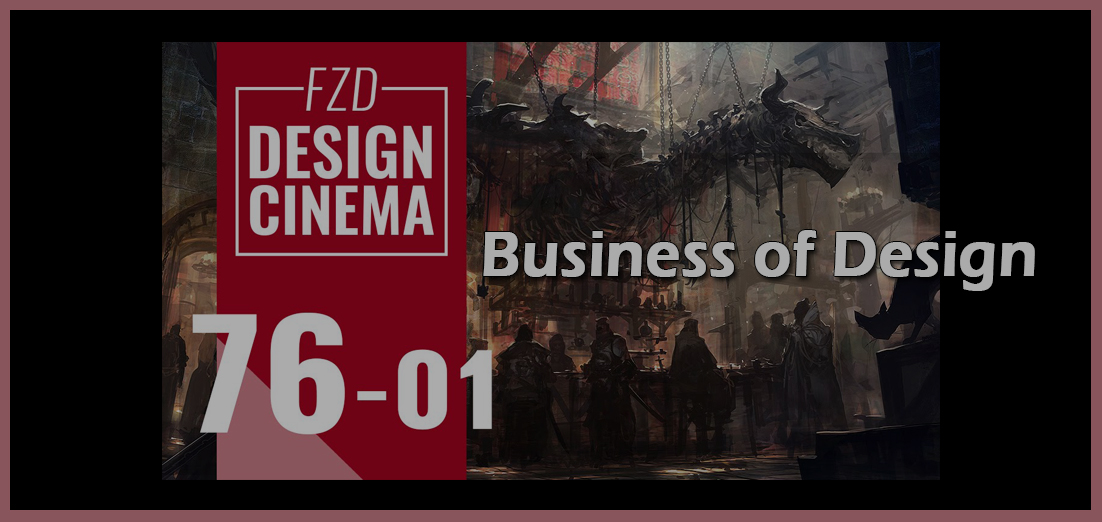
Design Cinema Episode 76: The Business of Design with Feng Zhu
This week ending 04/02/16 we have gathered an old FZD: Design Cinema episode that goes over the business of designing. There are many things that as a video game designer must be kept in mind. Check out what happens behind the scene when artists have to come up with concepts that meet client requirement needs as well as specifications for a subject matter. Enjoy!
Click on the link below:
Design Cinema Episode 76: Part 1 Business of Design
Want to help us grow our resources section? If a resource has helped you greatly please e-mail it to me or any suggestions
to: me@eliottlillyart.com. I will be keeping this list updated as I discover new entries. Thank you--